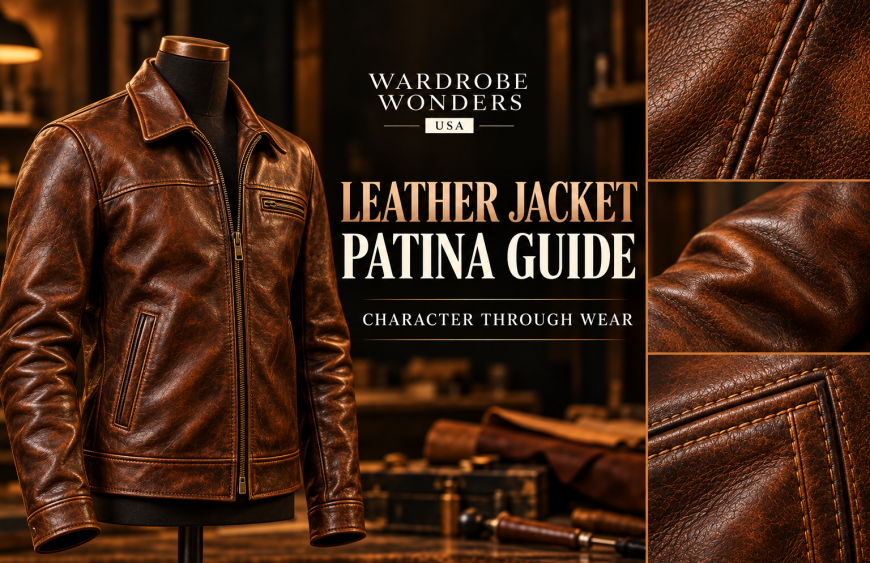
Leather jacket patina is the gradual change in a leather surface that gives a jacket its lived-in character. A richer tone, a gentle sheen, or small variations across the surface can make a well-worn piece feel personal. But every jacket ages differently, and an attractive aged look should never be confused with a damaged garment.
This guide explains what patina means, how to set realistic expectations, and what to ask before choosing a jacket you hope to wear for years.
What does leather jacket patina look like?
Patina describes changes in color, sheen, and surface character through use. Some leathers become deeper in tone, while areas that receive regular contact may develop a smoother appearance. The result is often subtle rather than dramatic.
The finish matters. Minimally finished leather can show more visible change, while a heavier surface coating may keep the appearance more consistent. Coach’s explanation of leather patina gives useful background on these surface changes. Although its examples focus on bags, the distinction between exposed and heavily finished leather helps explain why jacket aging varies too.
Choose the aged look you actually enjoy
Before shopping, decide what you want your future jacket to look like. Do you love a clean, even surface? Or do you prefer a relaxed appearance with visible variation? Neither preference is wrong. A jacket should suit your taste today as well as the look you might enjoy later.
Try this simple exercise: save three reference photos of older jackets you like. Look past the outfit and focus on the leather itself. Note whether you like strong color contrast, understated wear, or a consistently polished finish. These references make a conversation with a retailer much more useful than simply asking for leather that “ages well.”
Color is another part of that decision. Compare the starting shades in our black vs brown leather jacket guide, then choose the color you would still enjoy before any patina appears.
Ask about the finish, not just the leather name
A label such as cowhide or sheepskin does not tell the whole story of a jacket’s surface. When the product description is unclear, ask the seller what finish the jacket has and whether the photos show a new or intentionally distressed garment.
- Is the photographed jacket new, pre-worn, or factory distressed?
- Does the retailer have close-up images of the actual finish?
- Are variations part of the advertised design?
- What appearance changes does the maker say to expect?
- Which care instructions apply to this specific jacket?
Keep the answers with your order details. This gives you a useful reference if the item looks different on arrival. For a broader purchase checklist, read our leather jacket buying guide.
Patina, distressing, and damage are different questions
When assessing an aged jacket, separate appearance from condition. First ask whether you like the color and texture. Then check whether the garment remains comfortable and functional. A stylish surface does not excuse a broken fastening or an opening seam.
Factory distressing describes an appearance created before purchase. Natural wear describes what happened during use. A photo alone may not tell you which you are seeing, so request a clear description instead of guessing.
If you notice peeling, a tear, persistent discoloration, or a suspicious patch, do not assume it is desirable patina. Photograph it and ask the maker or a leather specialist to assess it. Avoid covering an unexplained problem with a treatment chosen only to make the color look even.
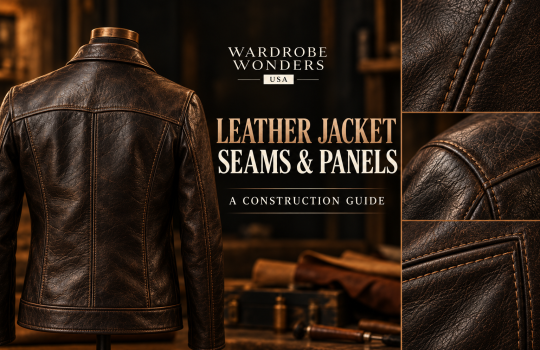
Inspect the jacket as a complete garment. Our seams and panels guide and hardware guide provide separate checks for its construction and fastenings.
Give leather jacket patina time
There is no reliable universal schedule for a particular jacket to achieve a particular aged look. Frequency of wear, surface finish, and the conditions it encounters all influence the outcome. Two owners should not expect identical results.
A useful personal record is a set of photos taken when the jacket arrives. Photograph the front, back, sleeves, and collar in the same soft light. Later, use a similar setup to compare its appearance. Changing lighting can make a color difference look larger than it is.
Let the jacket become part of your normal wardrobe. Avoid treating a reference image as a deadline or forcing a rapid transformation. Follow the maker’s care guidance; our leather jacket care guide is a starting point for questions to consider.
Shop for the jacket, not a promise of future patina
Patina is an aesthetic preference, not a stand-alone test of value. Before buying, check today’s fit, design, construction, and product information. If you only like a jacket because you hope it will become something very different, reconsider the purchase.
Start with the men’s brown leather jacket collection or women’s brown leather jacket collection. Compare individual descriptions rather than assuming every brown jacket will age the same way.
Frequently asked questions
Will every leather jacket develop visible patina?
No. Some finishes show more noticeable surface change than others. Ask about the individual jacket instead of relying on a general leather label.
Can a new jacket already have an aged look?
Yes, a jacket may be sold with a distressed finish. Check the description so you know whether that appearance was part of its original design.
Does leather jacket patina prove high quality?
No. Judge the whole garment, including fit, stitching, hardware, and the clarity of its specifications. Surface character is only one part of the decision.
Should I buy a jacket only for how it might age?
Choose one you already like. Future character can be a welcome bonus, but an uncertain change should not replace a good fit and a design you enjoy wearing.