A leather jacket lining can change how a jacket feels every time you put it on. The outside may have the color and shape you want, but the inside determines whether sleeves slide over a shirt, whether extra padding crowds your shoulders, and how comfortable the jacket feels during your usual day.
The most useful comparison separates three details: fiber, fabric construction, and insulation. A label such as “satin” or “quilted” answers only part of the question. This guide explains how to read those descriptions and inspect the interior before choosing your next jacket.
Leather Jacket Lining: The Quick Answer
For easy layering, look for a smooth lining and enough room for your usual clothes. For added warmth, check whether the jacket includes insulation, what that insulation is, and where it is placed. For comfort against a short-sleeve shirt, consider the fabric’s feel as well as its composition.
- Fiber: What is the lining made from, such as polyester, viscose, cotton, or a blend?
- Construction: Is it smooth, brushed, woven, or quilted?
- Insulation: Is there a separate fill layer, and does it cover the body, sleeves, or both?
- Fit: Does the complete jacket allow comfortable movement with your intended layers?
Lining, Interlining, and Insulation: What Is the Difference?
The lining is the inner fabric you normally see and touch when you open a jacket. It covers the inside construction and provides a surface between the leather shell and your clothes.
An interlining sits between the outer material and the lining. Depending on the garment, it may provide structure or help carry an insulating layer. Insulation is material used to reduce heat loss; it may be hidden behind the visible lining.
That is why a glossy interior does not prove that a jacket is lightweight, and a diamond stitch pattern does not tell you how warm it will be. Ask about the layers beneath the surface. Two jackets can look similar inside while using different amounts of fill.
Common Leather Jacket Lining Descriptions
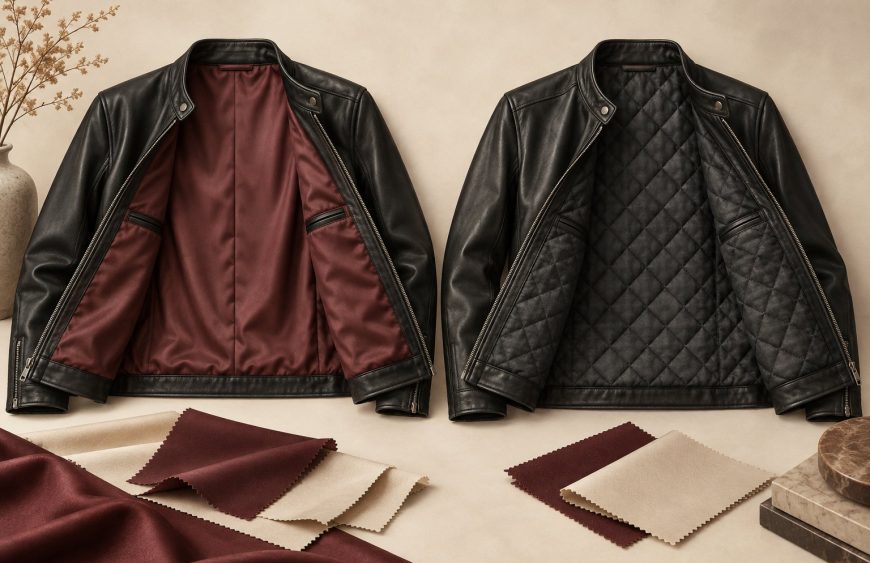
Smooth satin lining
Satin describes a weave rather than one specific fiber. A satin lining may use polyester, silk, or another suitable fiber. Read the composition instead of assuming that a shiny surface means silk.
A smooth surface can make it easier to slide sleeves over a shirt or fine sweater. However, the fabric’s weight, finish, and construction still affect its feel. Check a close-up photograph and ask for the fiber content when the listing says only “satin lining.”
Polyester lining
Polyester identifies the fiber, but it does not identify the complete lining design. It can appear in a thin smooth fabric or as part of a quilted assembly. Compare whether the product description refers to the visible fabric, the filling, or both.
For example, “polyester lining” and “polyester insulation” describe different jobs inside a jacket. Neither phrase alone gives you a reliable temperature rating.
Viscose, rayon, and cupro lining
You may also encounter viscose, rayon, or cupro in lining descriptions. These names refer to regenerated cellulose fibers; they do not establish the fabric’s thickness or weave. For example, Asahi Kasei identifies Bemberg as a cupro fiber. A soft-looking interior is still worth checking for its actual composition and care instructions.
If next-to-skin comfort matters, consider how the fabric feels at the neck, cuffs, and forearms. A lining that works over a long-sleeve shirt may feel different over a T-shirt.
Cotton and flannel lining
Cotton names a fiber, while flannel describes a fabric with a soft, often brushed surface. Flannel may contain cotton, wool, or a blend. A description that says “flannel-lined” therefore needs a composition detail too.
Pay attention to the sleeves as well as the body. Some jackets combine a textured body lining with smoother sleeve linings. This can give the torso a different feel while helping your arms move into the jacket.
Quilted lining
A quilted lining has stitched layers, often arranged in diamonds or channels. When it includes insulating fill, it can add warmth and volume. The stitching pattern alone cannot tell you the fill material, fill weight, or warmth of the finished jacket.
As one construction example, Schott’s 519 jacket specification identifies a specific quilted insulation weight. The useful lesson is to look for that level of detail when comparing interiors, rather than judging from the quilting pattern.
How to Compare Leather Jacket Lining Labels
Use the following questions when a product description is brief. They turn broad material names into details you can actually compare.
| Listing says | What it tells you | What to ask next |
|---|---|---|
| Satin lining | The weave or surface description | What is the fiber composition? |
| Polyester lining | The lining fiber | Is it a plain fabric or an insulated assembly? |
| Quilted lining | The stitched construction | Is there fill, and what is its material and weight? |
| Flannel lining | The fabric type | What fibers are used, and are the sleeves lined differently? |
| Removable liner | The inner layer can be detached | Does it include the sleeves, and how does the jacket fit without it? |
Choose a Jacket Lining for Your Daily Routine
Short trips and frequent indoor stops: Start by comparing less bulky interiors. If you spend much of the day in heated rooms, a heavily insulated jacket may spend more time on your arm than on your shoulders.
Longer periods outside in cool weather: Look for clearly described insulation and room for an appropriate layer. Consider the complete jacket, including its length, closure, collar, and cuffs. A lining label by itself cannot establish suitability for severe cold.
Changing conditions: A removable liner may offer flexibility, but check exactly what comes out. A sleeveless insert changes the body differently from a full liner. Try the jacket in both configurations when possible.
Regular sweater wear: Focus on sleeve movement and interior space. Our guide to wearing a leather jacket with a sweater can help you plan the layer you will use during a fitting.
Inspect Your Leather Jacket Interior in Five Places
When your jacket arrives, check it indoors while following the store’s return conditions. Use good light and look at the inside before removing any tags.
- Shoulders and armholes: Reach forward gently. Notice whether the lining pulls tight before the outer jacket does.
- Sleeves: Put your arms in and out over your usual shirt. Check for twisting or bunching around the elbow.
- Front zipper: Close it slowly and make sure the lining stays clear of the teeth.
- Pockets: Look for tidy attachment points and check that the pocket bags sit comfortably.
- Hem and cuffs: Check for unexpected lining hanging below the leather, loose seams, or caught fabric.
A small fold or allowance can be intentional and help the lining move. Persistent pulling, a twisted sleeve, or an open seam deserves a closer look. Photograph the issue and ask the seller before attempting a repair. For the outer jacket’s measurements, see our leather jacket fit guide.
Leather Jacket Lining Questions to Ask Before Ordering
If a listing leaves the interior unclear, send the product name or link along with a short checklist:
- What are the fiber percentages in the body and sleeve linings?
- Is there insulation between the lining and shell?
- Does the insulation cover the sleeves as well as the body?
- Is any liner removable, and is it included with this jacket?
- Can you provide a clear interior photograph and the garment’s care instructions?
Keep the reply with your order details. It gives you a clear reference when the jacket arrives and helps you compare products on the same basis.
Leather Jacket Lining FAQs
Is a satin lining the same as a polyester lining?
No. Satin refers to a weave, while polyester refers to a fiber. A lining can be polyester satin, but a satin lining is not necessarily polyester. Check the composition label for the full description.
Does a quilted lining always make a jacket warmer?
Quilting alone does not establish warmth. Look for insulating fill, its weight or thickness, and where it is placed. The outer shell, fit, openings, and clothes underneath also affect comfort.
Should I size up for a thicker lining?
Do not automatically choose a larger size. The jacket’s pattern may already account for its lining. Compare the seller’s measurements and try it with your intended clothes. Ask for help if the interior feels restrictive even when the shoulders look right.
Can I wash the lining separately?
Only treat it separately if it is designed to detach and its own care instructions permit the method. A sewn-in fabric lining does not make the complete leather jacket machine washable. Follow the garment label or ask a leather garment specialist.
Can a damaged lining be replaced?
A specialist may be able to repair or replace it, depending on the jacket’s construction and condition. Ask for an assessment before cutting out fabric. Replacement can affect interior room, pocket placement, and how the jacket hangs.
Compare the Inside Before You Choose the Outside
The best leather jacket lining for you depends on your layers, routine, and preferred feel. Identify the fiber, understand the construction, and check for separate insulation. Then assess the complete jacket in motion.
Explore Wardrobe Wonders’ men’s leather jackets and women’s leather jackets. For details about the lining in a particular style, contact our team before ordering.