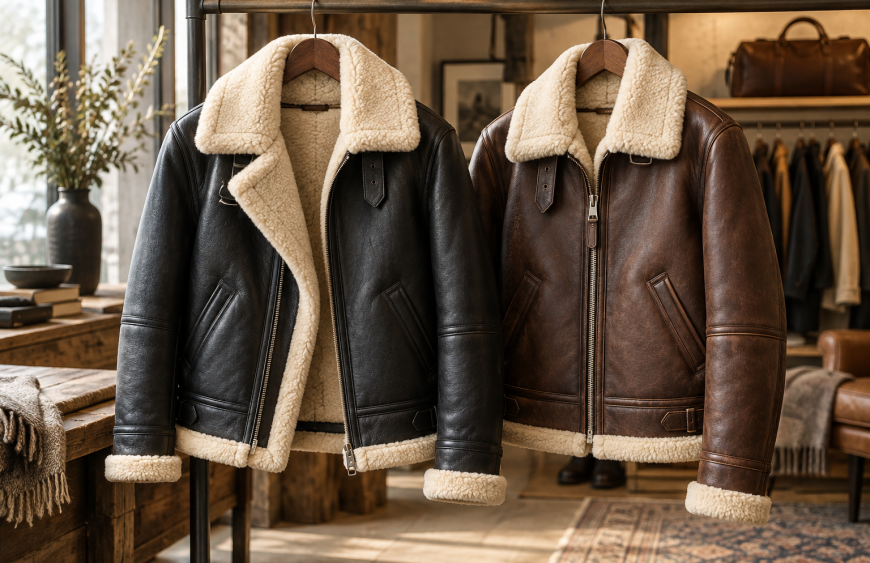
This shearling jacket guide helps you look beyond a fluffy collar and compare the details that affect everyday wear. A winter-style leather jacket may have natural wool attached to the hide, a separate lining, or faux-shearling trim. Those constructions can look similar in photographs, so the product description matters as much as the silhouette.
Use the seven checks below to compare materials, lining coverage, sizing, closures, and care before ordering. The aim is to choose a jacket that suits your routine and existing wardrobe, with clear expectations about what you are buying.
What Should You Check Before Buying a Shearling Jacket?
Quick answer: Confirm the outer material and lining separately, check whether insulation extends through the body and sleeves, and compare the size chart with your intended layers. Then review the collar, cuffs, pockets, care instructions, and current return policy. A style name or a wool-like collar alone cannot answer those questions.
1. Understand Shearling, Sheepskin Leather, and Faux Shearling
Natural shearling is sheep or lamb skin processed with its wool still attached. The American Sheep Industry Association’s leather glossary explains the material and distinguishes it from other sheepskin terms. Sheepskin leather can also describe the leather used for an outer shell, without telling you what lines the jacket.
Faux shearling is an imitation of the woolly appearance. A real leather outer shell can therefore be combined with a faux-shearling lining. Read both specifications rather than assuming that the word “sheepskin” means the entire jacket is natural wool-on-hide.
For a store example, the description of our Men’s Aviator B3 Black Shearling Sheepskin Leather Jacket lists genuine sheepskin leather and describes a faux-shearling lining. Check the current product details, and contact us if you need the lining composition clarified before ordering.
2. Check Where the Lining Actually Goes
A thick collar gives a jacket a recognizable look, but it does not show how the body or sleeves are lined. Look for interior photographs and a separate lining description. If those details are missing, ask whether the same lining continues through the sleeves or whether another fabric is used.
This matters when you plan your layers. A heavily lined sleeve may leave less room for a chunky sweater, while a smoother sleeve lining can feel different when putting the jacket on. Compare the full construction instead of judging warmth from the collar alone.
Ask before buying: Is the collar trim the same material as the body lining? Are the sleeves lined in the same way? Is any lining removable? Only treat a feature as included when the individual product confirms it.
3. Compare Body Measurements with Jacket Measurements
Body chest and jacket chest are different measurements. The body measurement is taken around you; the jacket measurement includes space inside the garment. Read the chart headings carefully and follow the measuring method provided on the product page.
Compare chest, shoulder, and sleeve measurements rather than choosing by the size letter alone. If you already own a comfortable winter jacket, measure it according to the same instructions. Its construction may differ, but it can provide a useful reference when discussing fit with our team.
Also consider your usual base layer. A jacket intended for a thin shirt may fit differently over thick knitwear. Our leather jacket fit guide covers movement checks, while the jacket and sweater guide helps you assess layering bulk.
At the try-on: Close the jacket, reach forward, bend your elbows, and sit down. Check for pulling across the back and pressure at the upper arms. Keep tags attached and follow the return conditions while assessing the fit.
4. Inspect the Collar, Cuffs, Hem, and Front Closure
The openings deserve as much attention as the lining. Check whether the collar lies flat, stands up, or has a fastening. If a buckle or strap appears in the photos, confirm how it works rather than assuming that every aviator design has the same features.
Compare open cuffs with closer-fitting cuffs and note where the hem sits. These details change the shape and feel of the jacket. A short hem may be convenient when seated, while a longer cut provides a different amount of coverage. Neither is automatically the better choice for every routine.
When the jacket arrives, test the zipper gently while standing and sitting. Keep loose lining away from the teeth, and check that you can move comfortably with the front closed. Do not force a fastening that catches or feels strained.
5. Choose a Shape and Color You Will Wear Often
Aviator, bomber, and hooded designs can create quite different outlines even within the same category. Start with how you expect to use the jacket: a daily commute, weekend outings, or short trips. Then compare collar size, body length, and the amount of visible trim.
Black leather with dark jeans creates a simple starting outfit. Brown leather can pair with navy denim, cream knitwear, and neutral boots. These are styling suggestions rather than fixed rules; use the colors already in your wardrobe to narrow the choice.
Browse our men’s shearling leather jackets to compare available shapes. For more color ideas, read our black vs brown leather jacket comparison. Check each listing separately because materials and features vary.
6. Match the Jacket to Your Actual Winter Routine
Consider the time you spend outside as well as the forecast. A short walk between buildings is different from a long outdoor wait. Warmth depends on the jacket’s construction, your other clothing, the wind, and your activity level. A shearling-style appearance does not establish a tested temperature rating.
Do not assume a leather jacket is waterproof or suitable for prolonged wet weather. Check the manufacturer’s guidance for the specific finish. If rain or wet snow is likely, choose outerwear suited to those conditions rather than relying on the look of the leather.
Finally, check practical details such as pocket placement and jacket weight. Make sure your everyday items fit comfortably without overfilling the pockets. If weight is important to you and it is not listed, ask for details before ordering.
7. Review Care and Purchase Details Before Checkout
Read the care instructions for the complete garment, including its lining and trim. A method suitable for smooth leather may not suit a suede finish or woolly lining. Avoid using an ordinary laundry cycle or applying a treatment unless the garment’s instructions allow it.
Our leather jacket care guide covers common mistakes. If you need specialist cleaning, describe both the outer material and lining to the cleaner. Ask the store for clarification when the care label or material description leaves an important question unanswered.
Before paying, review the selected size and color, current delivery information, and return and refund policy. Check any conditions that apply to the particular item. Save the product details and order confirmation so you can refer to what you selected.
Quick Shearling Jacket Buying Checklist
- Outer shell: Confirm the leather type and finish.
- Lining: Distinguish natural shearling from a separate or faux-shearling lining.
- Coverage: Check the body, sleeves, collar, and trim individually.
- Size: Compare body and garment measurements using the product’s method.
- Movement: Test the jacket with your intended layers.
- Details: Review the zipper, cuffs, hem, and pockets.
- Care and purchase: Read the garment instructions and current order policies.
Shearling Jacket Guide FAQs
Is a sheepskin leather jacket always natural shearling?
No. A jacket can use sheepskin leather for its outer shell and a different material for its lining. Natural shearling retains wool on the hide. Confirm the outer shell and lining separately instead of relying only on the product name.
What is the difference between a shearling collar and a full lining?
A collar describes the area around the neck. It does not confirm what is inside the body or sleeves. Check interior photographs and the lining specification, or ask the seller to explain where each material is used.
Should I size up for a shearling-style jacket?
Not automatically. Start with the individual size chart and your intended layers. Lining thickness and jacket cut affect the usable space. If you fall between sizes, follow the product’s guidance or ask for help with your measurements.
Is a shearling jacket warm enough for every winter?
No single style name guarantees that. Construction, layers, weather, activity, and time outdoors all matter. Use any verified performance information provided for the specific garment and choose suitable outerwear for the conditions.
Can I wear a shearling-style leather jacket in the rain?
Do not assume it is waterproof. Follow the care guidance for the exact leather finish and lining. For sustained rain or wet snow, use outerwear designed for that weather and avoid applying unapproved treatments.
Find a Jacket with the Details That Suit You
Use this shearling jacket guide to build a shortlist based on materials, fit, and everyday use. A clear lining description and a useful size chart are more helpful than choosing from the front photograph alone.
Explore Wardrobe Wonders’ men’s shearling jacket collection and women’s shearling jacket collection. Compare individual product details, then contact our team with any material or sizing questions before placing your order.